Best Gifts for 6-8 Year Olds: 8 Ideas for the Years Hobbies Appear
Between six and eight, children stop sampling and start specialising. Eight gifts that survive a real hobby, with the safety checks that change at this age.
How we make money: some links on this page are affiliate links. If you buy through them we may earn a commission at no extra cost to you. Our picks and rankings are not paid placements.
How we picked
- We only publish a guide when there is a real shortlist behind it. If we cannot justify a pick in one sentence, it does not go in.
- Every pick is checked against the age grading the manufacturer states and the current US recall list before it is listed.
- Prices are checked against at least two retailers. If a pick is out of stock we say so instead of quietly leaving a dead link.
- No brand can pay for a position. Commission never decides what is recommended or where it ranks.
Somewhere between six and eight, a child stops trying everything and starts choosing: dinosaurs, football, coding, drawing, football again. The gift that lands is the one that feeds a specific interest rather than covering all of them.
Everything below is a type of toy rather than a brand, and most entries assume the child already has a preference. Where a gift works for any interest, it is because it hands over a real skill.
What a six- to eight-year-old can do alone
Across this range, most children can:
- read instructions and work independently for 30–60 minutes;
- play a game with strategy, not just luck, and argue about rules;
- use real tools with supervision — saw, needle, screwdriver;
- sustain a collection or project across weeks.
That is the shift that changes gift-buying: at six you buy a toy, at eight you buy equipment. The better version of each item below is the one the child can maintain themselves.
Build with a real mechanism
A build that takes two days
A 300–800 piece construction set in the child’s interest. The reward at this age is completion. A set that takes two sittings teaches project persistence, which is worth more than the model.
Street price is usually $40–$90. What to check: the instruction booklet has piece callouts, spare small parts are included, and the box states 7+ or 8+ if the child is at the younger end
A kit with a real circuit
A snap-circuit or microcontroller starter kit. Six- to eight-year-olds can follow a wiring diagram and see a result. This is the age where ‘electronics’ stops being a black box.
Street price is usually $30–$70. What to check: no mains voltage anywhere, components are labelled, and the projects in the manual actually work as printed
A real tool kit of their own
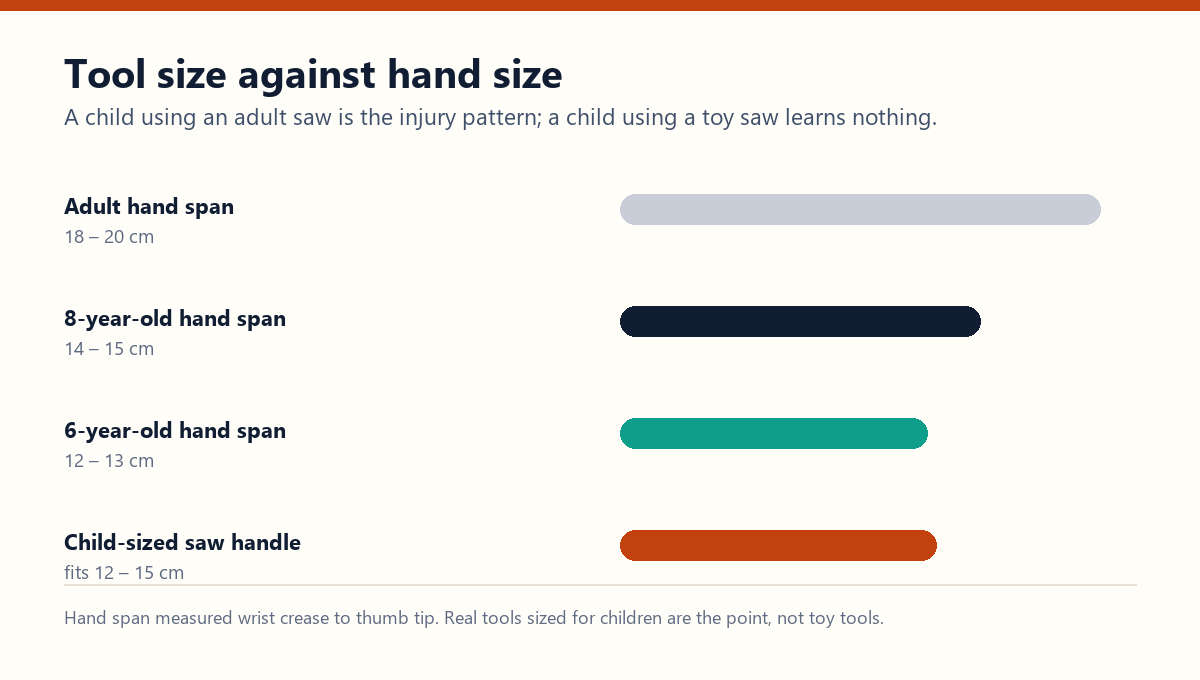
Small saw, hand drill, clamps, safety glasses, wood offcuts. A child with their own tools stops asking to borrow yours. Buy small and real rather than plastic and safe: a toy saw teaches nothing and frustrates quickly.
Street price is usually $30–$60. What to check: tools are sized for a child’s hand, safety glasses actually fit, and there is a adult-supervision note on the box
Play with depth
A strategy game the family will keep playing
A board game with real decisions, 30–45 minutes, 2–4 players. At eight, luck-only games get boring within a month. A game with two or three real decisions holds for years and teaches losing gracefully.
Street price is usually $25–$50. What to check: the rulebook is under four pages, a round fits in 45 minutes, and there is no player elimination
A card game with bluffing and memory
A dedicated-deck card game for 2–6 players. Card games are the cheapest way to get a family around a table, and bluffing games scale from six to eighty.
Street price is usually $10–$20. What to check: the deck is plastic or linen-finish so it survives, and the rules fit on one card
A journal and pens worth using
A hardback notebook plus two good pens. Between six and eight, children start wanting privacy and ownership. A book with a lock or a plain cover gets used; a themed one often does not.
Street price is usually $10–$25. What to check: paper thick enough for felt tips, and a binding that opens flat
Move and perform
Sports gear sized to the child, not the future
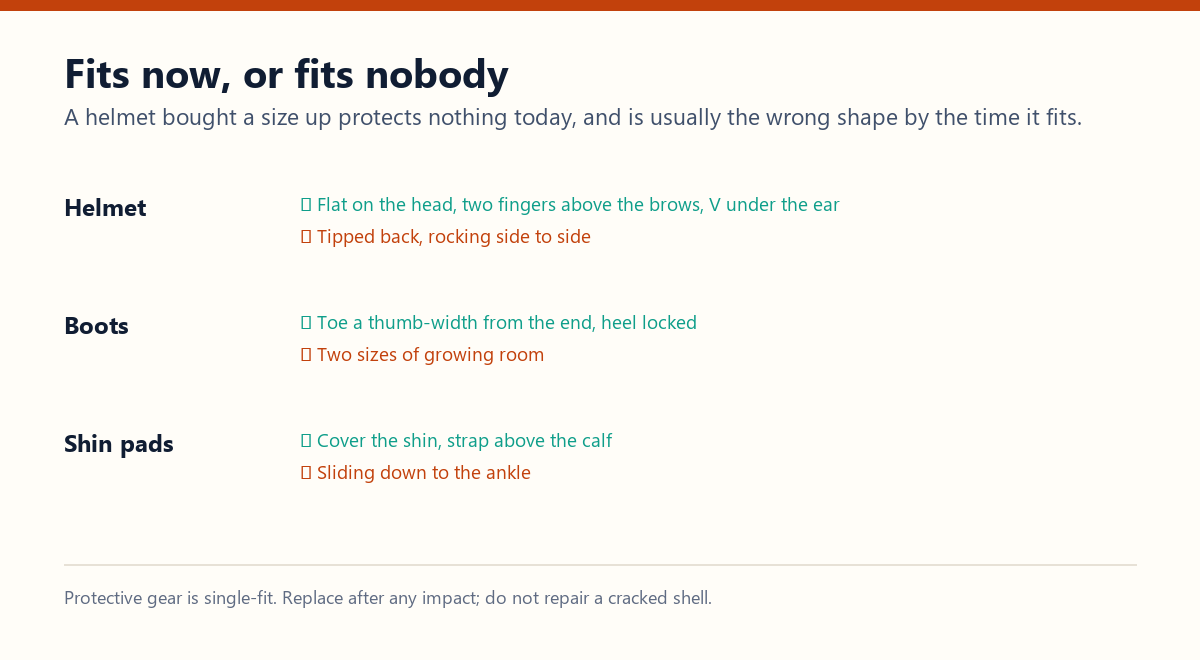
A helmet, shin pads or boots that fit now. The most common gear mistake is buying a size up. Ill-fitting protective gear protects nothing, and a helmet that slides back is worse than no helmet.
Street price is usually $25–$70. What to check: the helmet sits flat with two fingers above the eyebrows, and the strap forms a V under the ear
An instrument they can tune themselves
A ukulele or recorder plus a clip-on tuner. At this age an instrument needs to be in tune within ten seconds or it gets abandoned. A clip-on tuner removes the adult dependency.
Street price is usually $30–$70. What to check: the instrument holds tune for a week, and the tuner clips to the headstock
What each budget actually buys
| Budget | What it buys at this age | What to skip |
|---|---|---|
| Under $25 | A card game, a journal, a hand lens, a book in their interest | Big kits with 500 pieces and no clear project |
| $25–$70 | A circuit kit, real tools, a strategy game, sports gear | Anything requiring a subscription to keep working |
| $70–$90 | A large construction set in a specific interest | Sets graded 9+ bought for an eight-year-old |
The safety checks we apply
The risks shift at this age from swallowing to tools, sport and screens:
- Real tools need real supervision for the first few uses, and safety glasses that fit — an adult pair does not.
- Helmets are replaced after a crash, not repaired. Check the shell for cracks and the strap for fraying each season.
- Check age grading on chemistry and craft kits. Slime, resin and dye kits carry their own age limits and ventilation requirements.
- Sports and play equipment recalls are listed in the CPSC database; toy testing standards are in ASTM F963.
- Online-connected toys need an adult in the account setup; the AAP’s school-age guidance covers media use at this age.
Questions parents ask
How do I buy for a child whose interests change monthly?
Buy equipment rather than themes. Tools, a good notebook, decent pens and a real ball survive a change of obsession; a dinosaur-specific kit does not.
Is a games console reasonable at eight?
That is a household decision, not a safety one, but the practical pattern that works is co-play plus a time limit agreed before the console arrives — not after.
Should I buy the next size up in sports gear?
No for helmets and boots, maybe for shin pads. Protective gear only works at the size it was fitted for.
Shopping for a different age? The age index covers every band from one to twelve. For how picks are made and how this site earns money, see how we choose gifts.