Best Gifts for 3-Year-Olds: 8 Ideas for the Year Pretend Play Starts
At three, a child stops copying and starts directing. Eight gifts that feed that, with the safety checks that still apply at this age.
How we make money: some links on this page are affiliate links. If you buy through them we may earn a commission at no extra cost to you. Our picks and rankings are not paid placements.
How we picked
- We only publish a guide when there is a real shortlist behind it. If we cannot justify a pick in one sentence, it does not go in.
- Every pick is checked against the age grading the manufacturer states and the current US recall list before it is listed.
- Prices are checked against at least two retailers. If a pick is out of stock we say so instead of quietly leaving a dead link.
- No brand can pay for a position. Commission never decides what is recommended or where it ranks.
Three is the year the script appears. A two-year-old feeds a doll because you fed a doll; a three-year-old feeds the doll, then tells you the doll is allergic to carrots. That shift — from imitation to direction — is what a good gift at this age has to feed.
Everything below is a type of toy rather than a brand. What makes these work is that they hand the child a role and get out of the way.
What a three-year-old can do alone
At three, most children can:
- hold a pretend role for five or ten minutes and give other people parts;
- draw a circle on purpose and tell you what it is;
- pedal a trike on flat ground, and stop by putting feet down;
- follow two instructions in a row, when they feel like it.
The gifts that fail at three are the ones that only work one way. The gifts that last give a role, a tool, or a rule — and let the child decide the rest.
Pretend with a job
A trike with a parent handle
A three-wheel trike with a push handle and a real brake. The parent handle buys you two years: you push now, they pedal later. Get one with a brake at the handle, or you will be chasing it down a slope.
Street price is usually $70–$140. What to check: the handlebar locks out when the child steers, the brake works from the handle, and the seat adjusts
A doctor kit with a working stethoscope
A doctor or vet kit with a real diaphragm stethoscope. Three-year-olds check whether a tool responds. A stethoscope that actually carries sound keeps the game running; a silent plastic disc ends it in a minute.
Street price is usually $20–$35. What to check: no real needles, no syringes with detachable tips, and a case that closes
Dress-up that is not a costume
Two or three open pieces: a cape, a hat, a bag. A single-character costume only works if the child wants that character. A cape works for a dragon, a doctor, a superhero and a ghost.
Street price is usually $15–$30. What to check: no cords or drawstrings at the neck, and fabric that survives a wash
Build and make
Magnetic tiles that survive being stepped on
A magnetic tile set of 32–60 pieces. Tiles let a three-year-old build something that holds its shape, which blocks alone cannot. Two triangles and two squares make a roof, and that discovery is the whole point.
Street price is usually $30–$60. What to check: magnets fully enclosed and silent when shaken, and no cracks along the seam
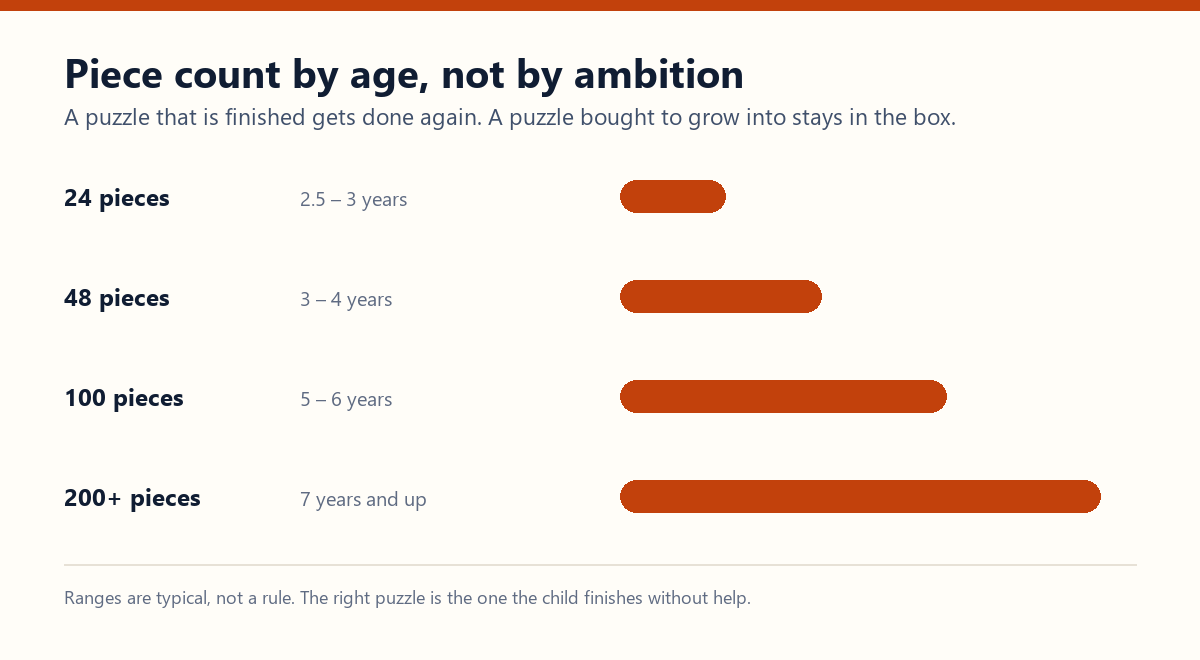
A floor puzzle with 24 to 48 pieces
One large floor puzzle, theme chosen by the child. At three, puzzle size should be measured in finished area, not piece count. A 48-piece floor puzzle is a ten-minute job with a visible reward.
Street price is usually $15–$30. What to check: thick board, distinct piece shapes, and a poster or guide picture included
Paint they can actually use alone
Washable tempera paint sticks and a roll of paper. Paint sticks remove the water cup, the brush and the spill. A three-year-old can open one, draw and close it without help, which is the difference between daily use and shelf use.
Street price is usually $10–$25. What to check: washable from fabric, and a cap a three-year-old can twist without tools
First games and first wheels
A game with one rule
A first board or card game with a single rule. Three-year-olds can hold one rule, not four. Games where everyone does the same thing each turn get played without an adult policing the rules.
Street price is usually $12–$25. What to check: a round takes under ten minutes, and losing does not knock a player out
A three-wheel scooter with a rear brake
A three-wheel scooter, adjustable bar, rear foot brake. The brake matters more than the deck. A child who can stop gets to go further, and a rear foot brake is the only kind a three-year-old can use on instinct.
Street price is usually $45–$90. What to check: the brake sits under the rear wheel where the heel lands, and the bar adjusts through at least 20 cm
What each budget actually buys
| Budget | What it buys at this age | What to skip |
|---|---|---|
| Under $25 | Paint sticks, a game, dress-up pieces | Kits with 200 tiny pieces and no clear first step |
| $25–$60 | Magnetic tiles, a floor puzzle, a doctor kit | Complex remote-controlled anything |
| $70–$140 | A trike with a parent handle, or a scooter with a real brake | Pedal bikes without a brake the child can reach |
The safety checks we apply
Three is where small parts become permissible for many toys — and where parents stop checking. Both are mistakes worth avoiding:
- Age grading is per toy, not per child. A ‘3+’ label means the toy has been assessed for small parts; it does not mean every three-year-old has stopped mouthing.
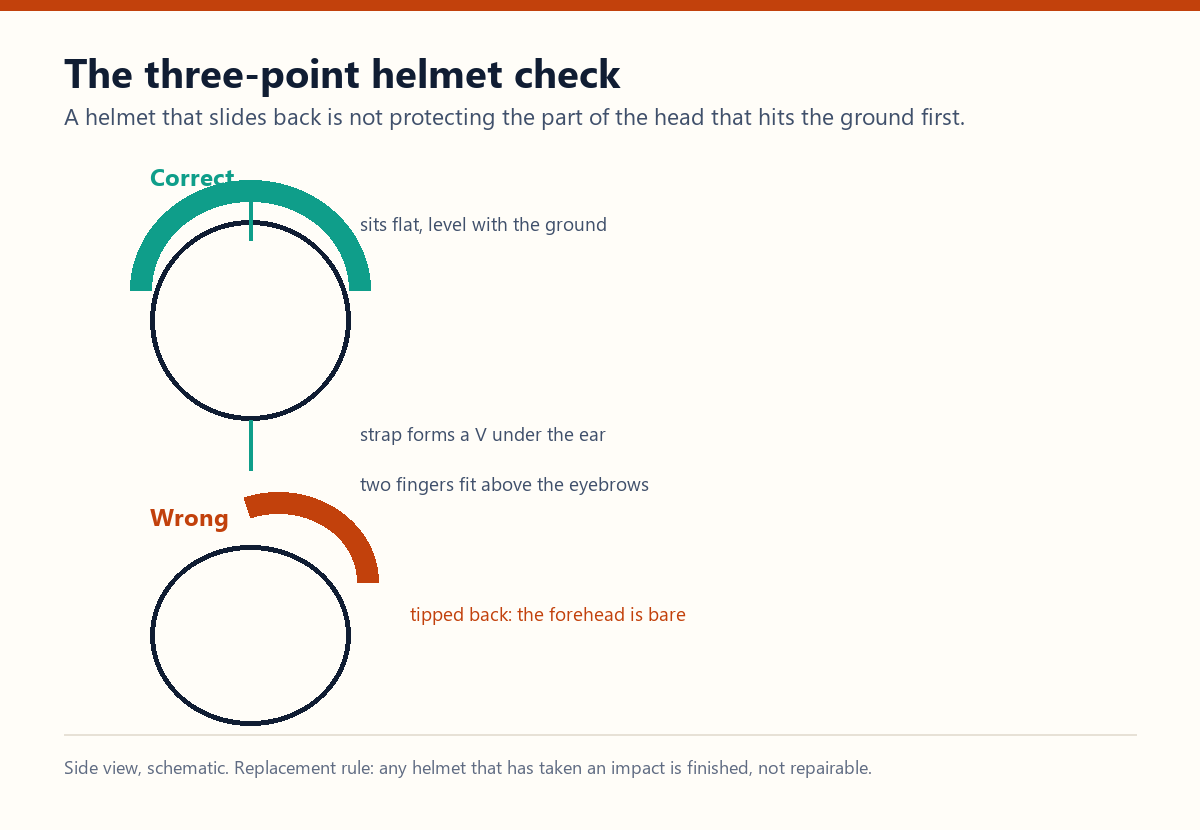
- Helmet for anything with wheels, fitted flat on the head, strap under the chin, two fingers of room above the eyebrows.
- Small magnets are still the worst-case item. If a magnetic toy has cracked, bin it — do not glue it.
- Check recalls twice a year. The CPSC recall database is searchable by brand; toys are recalled long after launch.
- Ride-on and scooter testing follows ASTM F963, and the AAP’s preschool guidance covers helmet and play-equipment basics.
Questions parents ask
Trike or balance bike at three?
A trike if the child is cautious or the ground is uneven; a balance bike if they already run and stop well. The trike teaches pedalling, the balance bike teaches balance — most children end up needing both.
How long should a three-year-old be able to play alone?
Ten to fifteen minutes of self-directed play is typical, longer if the setup is already out. The practical trick is leaving the toy out rather than packing it away.
Are workbooks useful at three?
Rarely. Three-year-olds learn the same concepts faster through play with physical objects — sorting, pouring, building — because the feedback is immediate.
Shopping for a different age? The age index covers every band from one to twelve. For how picks are made and how this site earns money, see how we choose gifts.